
When did penalties in football start?
Penalty kicks act as the ultimate judge, delivering a verdict on matches that are contested tooth and nail across every square inch of turf. The moment a referee points to the circular spot within the eighteen-yard box, the atmosphere in the stadium undergoes a violent schism.
One half of the crowd erupts in jubilant anticipation, visualizing a goal from a mere 11 meters away, while a suffocating silence descends upon the other. All the joy, fury, and heartbreak of the beautiful game are distilled into the fleeting seconds of a single strike. This "invention" is arguably what elevated football to its status as the king of sports.
You might wonder, how did we move from chaotic scrambles to this organized face-off? Alongside Nowgoalpro, let us explore the historical soil where the concept first grew and find out: When did penalties in football start?
When did penalties in football start?
The genesis of the penalty kick is a fascinating journey that takes us back to the late 19th century, specifically to the year 1890. The "inventor" was not an attacker looking for an easy goal, but a goalkeeper named William McCrum.
A member of the Irish Football Association, McCrum proposed the idea to stop the increasingly physical and often cynical "professional fouls" near the goal line that prevented certain scores. Before this, there was no specific punishment for a foul committed right in front of the net other than an indirect free kick, which was often easily blocked by a wall of defenders standing on the goal line.
The proposal was initially met with intense mockery and skepticism, with the press and players calling it the "death penalty" for defenders. Critics argued that the rule assumed players would intentionally act ungentlemanly, which went against the amateur spirit of the era.
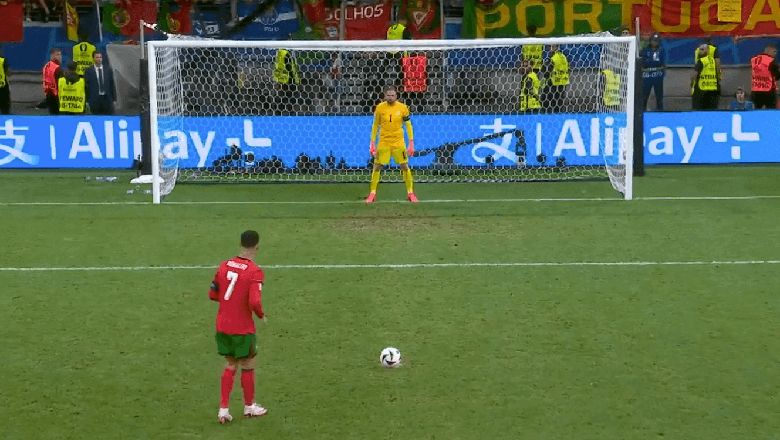
However, after several high-profile incidents of blatant goal-line handballing in cup matches, the International Football Association Board (IFAB) officially sanctioned the rule on June 2, 1891. Consequently, the first competitive penalty was awarded just days later to Airdrieonians in a Scottish match, while the first in the English Football League was scored by Billy Heath of Wolverhampton Wanderers against Accrington on September 14, 1891.
At its inception, the penalty was governed by a set of rules that look quite different from today's precision. According to the 1891 Laws of the Game: "If any player shall intentionally trip or hold an opposing player, or deliberately handle the ball, within twelve yards from his own goal-line, the referee shall, on appeal, award the opposing side a penalty kick, to be taken from any point 12 yards from the goal-line."
Crucially, there was no "penalty spot" initially. The kicker could choose any point along a line 12 yards out. Furthermore, the goalkeeper was allowed to advance up to 6 yards from the goal line to narrow the angle, making the duel even more chaotic. The requirement for the kicker to stand at a fixed spot and the goalkeeper to remain on the line only evolved later to ensure fairness and consistency.
As the game modernized, the purpose of the penalty expanded from a mere mid-game foul punishment to a method for deciding tied matches. By 1970, after decades of relying on expensive replays or the sheer unfairness of "drawing lots" (essentially a coin toss), the penalty shoot-out was adopted by IFAB. This shift was fueled by the congestion of fixture lists and the need for a definitive winner in continental competitions.
A pivotal moment occurred at the 1968 Olympics when Israel was eliminated by Bulgaria via the drawing of lots, leading Michael Almog of the Israel Football Association to formally propose the shoot-out system to FIFA.
Over the decades, players have developed iconic techniques to outsmart goalkeepers. The most famous is perhaps the "Panenka," created by Antonin Panenka in the Euro 1976 final. By chipping the ball gently into the center of the net while the keeper dives to a side, the kicker utilizes the keeper's momentum against them. It is highly effective because most keepers commit to a side early to cover the corners.
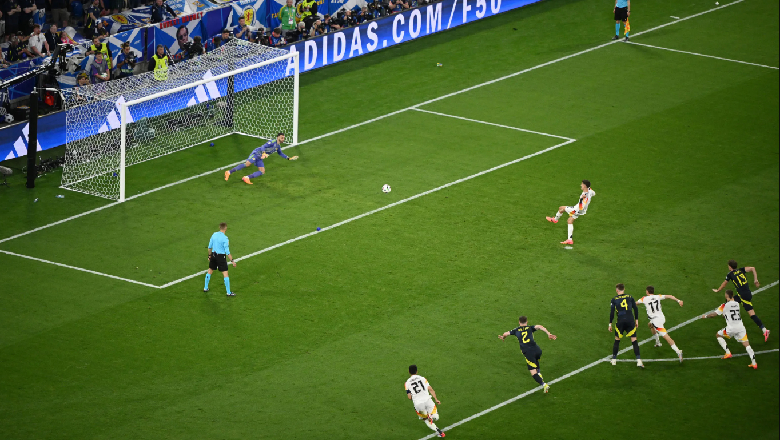
Another modern evolution is the "paradinha" or the "stutter-step," popularized by Brazilian stars like Pelé and later Neymar, which involves a hesitation in the run-up to force the goalkeeper to move first.
While German teams are legendary for their efficiency, having won every World Cup shoot-out since 1982, the sheer scale of some matches is mind-boggling. The highest score in a continental final was 11-10 during the 1992 Africa Cup of Nations.
However, the world record for the longest shoot-out was set in 2005 in the Namibian Cup, where KK Palace and Civics required a staggering 48 penalties to find a winner. On the individual side, names like Uli Stielike or Stuart Pearce became etched in history as the first to experience the specific agony of a World Cup miss.
The history of penalties:
1890: Proposed by William McCrum to punish goal-line fouls.
1891: Officially adopted by IFAB. The "penalty line" replaces the indirect free kick for major fouls.
1902: The modern penalty "spot" at 12 yards (approx. 11m) is introduced along with the 18-yard penalty area.
1970: Penalty shoot-outs are officially introduced to replace replays and the drawing of lots.
1982: The first-ever penalty shoot-out in a FIFA World Cup takes place (West Germany vs France).
Through this journey, Nowgoalpro.net has unveiled the definitive answer to the question: When did penalties in football start? From its origins as a tool for justice in the Victorian era to the high-tech, data-driven psychological battles of today, the penalty remains the most efficient and dramatic way to separate winners from losers. Do you agree that despite the tension, this remains the fairest way to decide a beautiful game?
Penalty kicks and many other fascinating yet often overlooked concepts in football will continue to be explored on the Nowgoalpro homepage in the future. If you find these historical insights and technical breakdowns intriguing, we invite you to join our project.
Beyond educational articles, Nowgoalpro serves as a premier sports destination with the mission of providing the fastest news updates, live results, and in-depth objective pre-match analyses. We strive to offer unique statistical data that you won't find anywhere else, ensuring you stay ahead of every whistle and every goal.
The Most Popular
-
 UEFA Champions League Final 2026 date, kick-off time, and venue
 -
 Why football is popular in Vietnam?
 -
 Which goalkeeper has conceded the most goals in football history?
 -
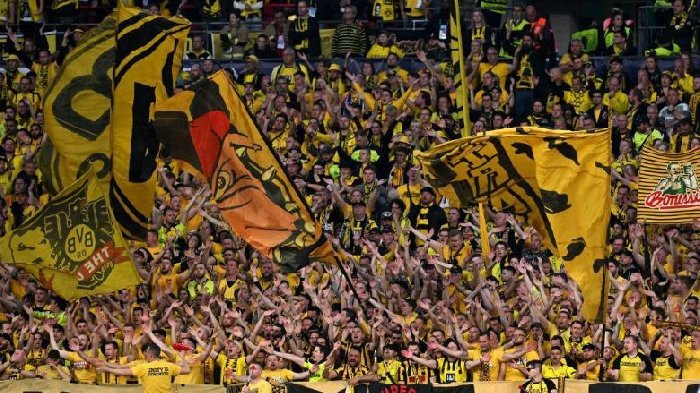 Top 10 clubs with the highest average attendance in European football 2023/24: German fan loyalty shines through
 -
 What is Pedri's position at Barcelona?
 -
 All Messi’s jersey numbers: Four other numbers worn besides the famous No.10
 -
 Why did Xavi leave Barcelona as manager?
 -
 How much did Chelsea sell Lukaku for?
 -
 How much did Barcelona pay for Griezmann?
 -
 Why did Sergio Ramos leave Real Madrid?